In Luocheng Mulao Autonomous County, a "Heavenly Pit” Transformed from Poverty to Tourist Hotspot
By Yu Jing
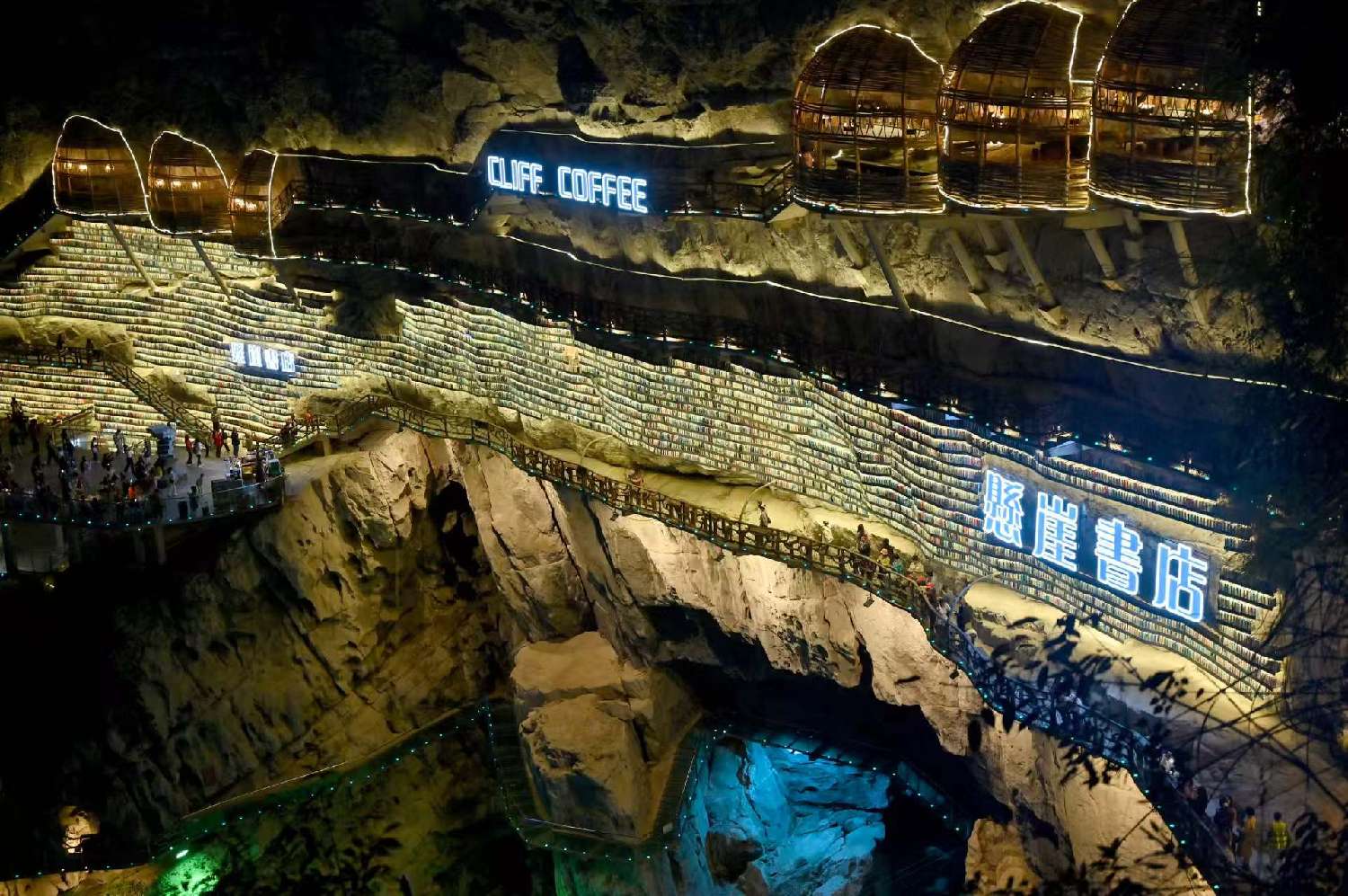
Nestled deep in the Dashi Mountain area in northwest Guangxi, the Mianhua Tiankeng (Mianhua Heavenly Pit) in Shendongtun (deep cave village) of Mianhua Village, Luocheng Mulao Autonomous County, Hechi, was once a symbol of poverty. Historically, due to the inaccessibility of roads and a scarcity of water and electricity, villagers depended on collecting rainwater and drawing water from caves to survive, which led many young people to leave in search of better opportunities. However, today, this hidden karst landscape has leveraged its natural resources to create distinctive tourism offerings, such as cliff hotels and bookstores. As a result, local residents are now able to earn an income from tourism, transforming the area from a struggling village into a vibrant tourist destination.
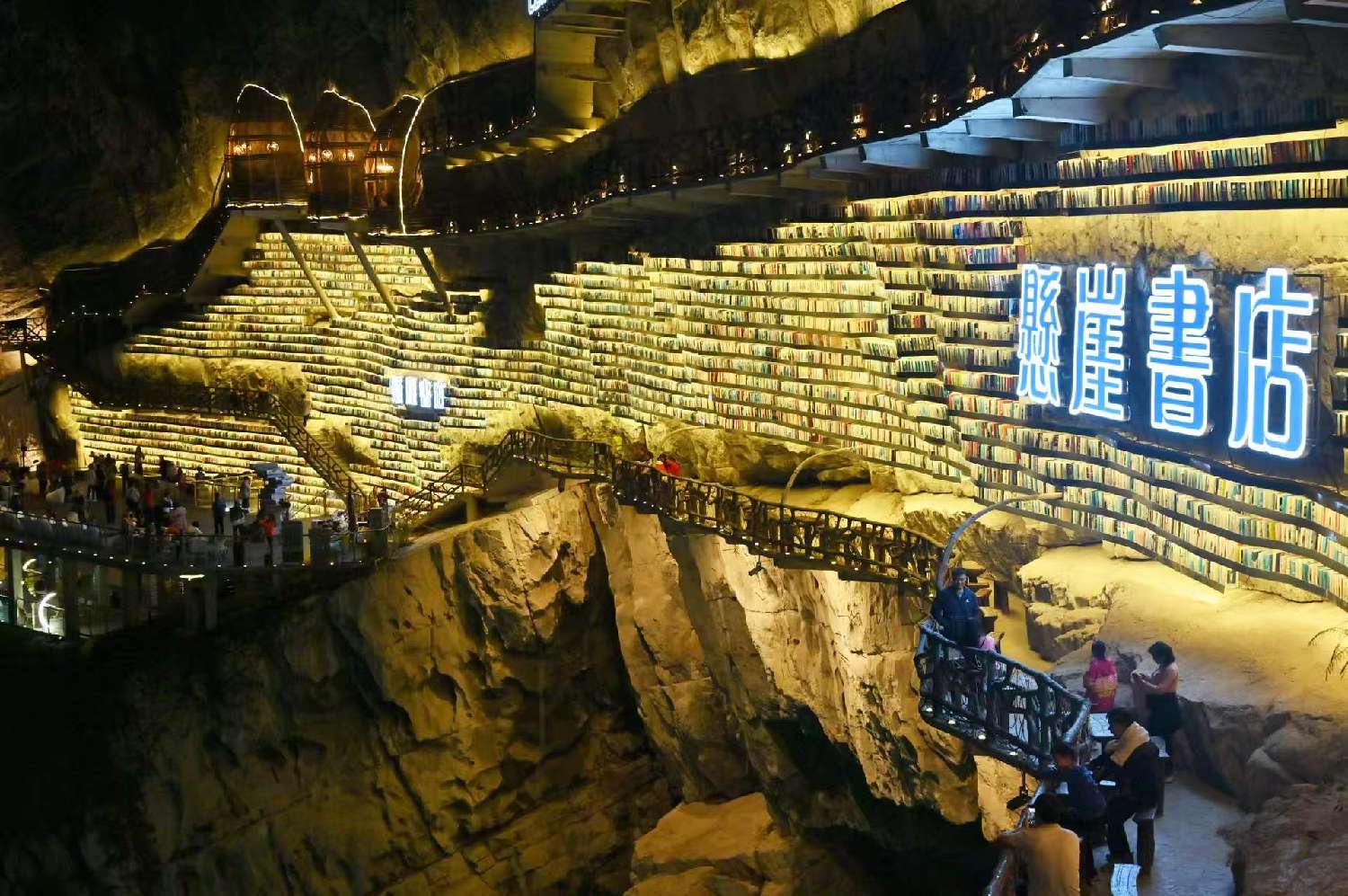
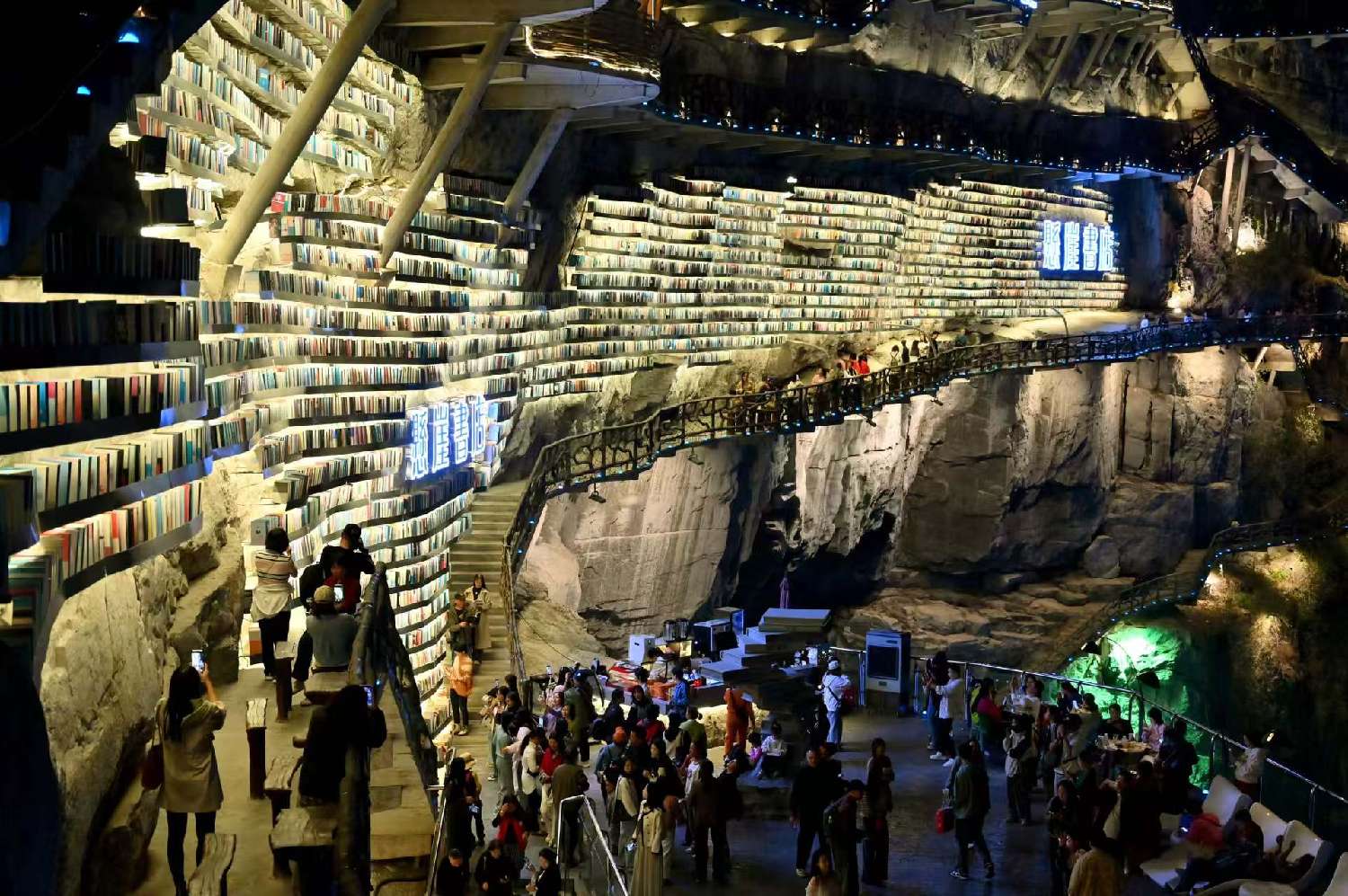
Upon entering the Mianhua Tiankeng tourism resort, visitors are greeted by a range of immersive attractions, including cliff bungee jumping, infinity pools, and glass slides, all harmoniously integrated into the natural landscape without harming its original topography. One standout feature is the cliffside bookstore, which hangs mid-air in the sinkhole and has welcomed over 100,000 visitors since its opening in May. With hundreds of books displayed on the cliff face, it provides a unique experience encapsulated by the sentiment, “the core of the earth beneath your feet and poetry and distant horizons in your heart,” capturing the interest of many tourists.
“We avoid large-scale excavation and instead focus on developing cliff-side attractions in harmony with the landscape,” explained Wu Taichang, the resort’s manager. He emphasized that the resort incorporates ecological protection into every stage of development, preserving the sinkhole's unique geological features while creatively enhancing its tourism value. Tourists can enjoy breathtaking views of the karst landscape, along with exciting attractions and serene cultural spaces.
Before its development for tourism, Mianhua Village, surrounded by layers of mountains, was once a deeply impoverished village, with Shendongtun being even more deprived. Situated at a high altitude and suffering from severe water shortages, the area had no paddy fields, and the little dryland available was fragmented by rocky hills. Villagers relied on growing corn and sweet potatoes to trade for food. At that time, "women marrying far away and men becoming live-in sons-in-law" was a true reflection of life in the local villages.
In 2019, with the local government's efforts to attract investment, the Cotton Tiankeng Scenic Area, with a total investment of several hundred million yuan (RMB, same below), was gradually completed and opened, bringing about transformative changes. Smooth roads and improved water and electricity facilities have transformed the lives of local villagers. Villagers who once migrated for work are now returning home to open homestays and agritainment businesses, earning a living from the tourism industry.
"Before, we wouldn't have dared to imagine that the poorest place on earth could be transformed into a tourism hotspot." Wu Junyi, a resident of Shendongtun in Mianhua Village, Luocheng Mulao Autonomous County, shared that he once traveled far to Guangdong for work. Upon learning about the development of the scenic area in his hometown, he made the decisive choice to return and start his own business. He started his business by selling congee and simple meals by the roadside, providing food and drinks for hiking enthusiasts. Today, he runs two homestays within the scenic area, with an annual income reaching over one hundred thousand yuan.
To attract tourists from afar, Cotton Tiankeng has delved into the cultural heritage of the Mulao people while developing tourism, promoting the deep integration of culture and travel. Wu Taichang mentioned that the scenic area places great emphasis on preserving Mulao culture. It has established an intangible cultural heritage corridor, a Mulao cultural museum, and organizes activities such as the grass dragon dance. These initiatives allow tourists to transition from passive observers to active participants, offering them an immersive experience of the charm of Mulao culture.
"The cliffside bookstore deep in the mountains is truly distinctive, and the bonfire party is thoroughly enjoyable for everyone," said Li Zhiming, a tourist from Yulin who made a special trip with his family. After trying activities such as the zip line, he noted that the experience of both admiring the spectacular Tiankeng and immersing himself in Mulao culture was unforgettable, underscoring the strong appeal of such tourism offerings to visitors from nearby areas.
In today's Mianhua Village, rammed-earth tile-roofed houses have been replaced by neat single-story homes, and dilapidated structures have been thoroughly renovated. Over a thousand villagers have benefited from tourism development. During holidays and festivals, the parking lots are often fully occupied, and homestays need to be booked a week in advance. The once "empty-nest" village now echoes with the sounds of cooking and laughter.
"Nowadays, few of us seek migrant work elsewhere—there’s more work here than we can handle," said Wu Junyi. He plans to open another new homestay, aiming to design it in the style of traditional Mulao earthen buildings and to incorporate Mulao cultural elements into the guest amenities, to attract more people to seek health and convalescence deep in the mountains and to vacation alongside the Mulao community. (End)
#TouristHotspot #Mianhua #HeavenlyPit #LuochengMulaoAutonomousCounty #ခရီးသွားလာရေး #အပန်းဖြေစခန်း #ကွမ်ရှီး #Guangxi #MFN #MyanmarFutureNews
MFN သတင်းများအားအောက်ပါ Link များတွင်လည်းဝင်ရောက်ကြည့်ရှုနိုင်ပါသည်။
Facebook – https://www.facebook.com/myanmarfuturenewsagency
Telegram – https://t.me/myanmarfuturenews
YouTube - https://www.youtube.com/@MyanmarFutureNews-MFN